Have you ever woken up with a sore jaw, a dull headache, or a nagging ache around your ears — without any clear reason? You might be grinding your teeth at night without even realizing it. This condition, known as bruxism, is far more common than most people think, and it can quietly damage your teeth, jaw, and overall quality of sleep if left unaddressed.
Bruxism refers to the involuntary grinding, clenching, or gnashing of teeth. It can happen during the day (awake bruxism) or at night while you sleep (sleep bruxism), and in many cases, people don’t even know they’re doing it until a dentist, partner, or family member points it out.
While occasional teeth grinding may not cause harm, chronic bruxism can lead to jaw disorders, headaches, tooth damage, and other complications. Understanding the causes, symptoms, and treatment options can help you manage it before it leads to long-term problems.
Table of Contents
What is Bruxism?
Bruxism is a repetitive jaw-muscle activity characterized by clenching or grinding of the teeth. It’s broadly classified into two types:
Awake bruxism — This usually happens during the day and is often linked to emotional stress, anxiety, or intense concentration. People may unconsciously clench their jaw while working, driving, or under pressure.
Sleep bruxism — This occurs during sleep and is considered a sleep-related movement disorder. It’s often associated with other sleep issues such as snoring or sleep apnea, and because it happens unconsciously, it tends to go unnoticed for longer periods — making it more likely to cause lasting dental damage.
Causes of Teeth Grinding
The exact cause of bruxism isn’t always clear-cut, but several factors are commonly linked to it:
Stress and anxiety — This is one of the most common triggers. Emotional tension, work pressure, or anxiety disorders can cause the jaw muscles to involuntarily clench, especially during sleep.
Sleep disorders — Conditions like sleep apnea, snoring, and other sleep-related breathing disorders are closely associated with sleep bruxism.
Abnormal bite or missing teeth — A misaligned bite (malocclusion) or missing teeth can cause the jaw to compensate unnaturally, often resulting in grinding.
Lifestyle factors — Excessive caffeine or alcohol consumption, smoking, and recreational drug use have all been linked to a higher likelihood of bruxism.
Certain medications — Some antidepressants, particularly selective serotonin reuptake inhibitors (SSRIs), have been associated with bruxism as a side effect.
Age — Bruxism is fairly common in children, and in many cases, it resolves on its own as they lose their baby teeth and the jaw matures. However, it can persist or develop later in adults too.
Personality traits — People who are naturally more aggressive, competitive, or hyperactive tend to show a higher tendency toward clenching and grinding.
Family history — Bruxism can run in families, suggesting a possible genetic component to the condition.
Symptoms of Bruxism
Bruxism symptoms can range from mild to severe, and since much of the grinding happens unconsciously during sleep, many people only notice the after-effects. Common signs include:
- Flattened, chipped, or loose teeth
- Worn-down tooth enamel exposing deeper layers of the tooth
- Increased tooth sensitivity to hot, cold, or sweet foods
- Jaw pain, tightness, or soreness, especially in the morning
- Dull headaches that originate near the temples
- Jaw muscles that feel tired or locked, especially upon waking
- A clicking or popping sound when opening or closing the mouth
- Earache-like pain, even though the ears themselves are fine
- Damage to the inside of the cheek from chewing
- Disrupted sleep (for the person grinding or their sleeping partner, who may hear the grinding sound)
If you notice several of these signs consistently — especially a pattern of teeth grinding at night — it’s worth getting evaluated by a dentist rather than dismissing them as unrelated issues.
Complications of Untreated Bruxism
When bruxism goes unmanaged over a long period, it can lead to more serious complications:
Temporomandibular joint (TMJ) disorders — Chronic grinding puts excessive strain on the jaw joint, which can lead to pain, stiffness, and difficulty with normal jaw movement.
Tooth damage — Over time, grinding can wear down enamel, crack teeth, or loosen them, sometimes requiring crowns, root canals, or even extractions in severe cases.
Chronic headaches and facial pain — The repeated muscle tension can trigger tension-type headaches and facial soreness that persist throughout the day.
Changes in facial appearance — In extreme, long-term cases, the constant muscle activity can alter jaw structure and facial symmetry.
Teeth Grinding Treatment Options
The right treatment for bruxism depends on its underlying cause and severity. In many mild cases, especially in children, no specific treatment is needed. For others, a combination of approaches tends to work best.
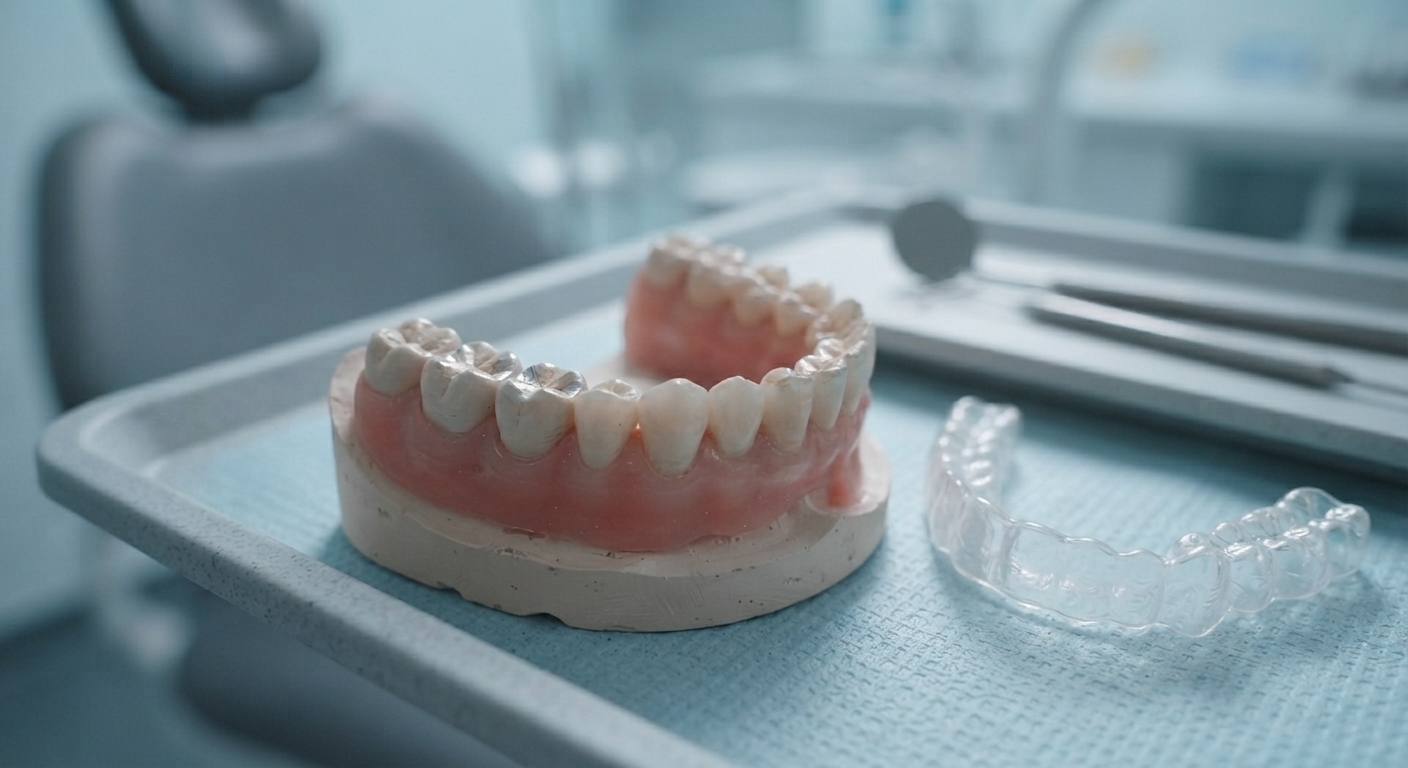
Mouthguards and splints — A custom-fitted night guard, made by your dentist, is one of the most effective and widely recommended solutions. It creates a physical barrier between the upper and lower teeth, protecting them from wear, while also easing pressure on the jaw joint.
Stress management techniques — Since stress and anxiety are major triggers, managing them can significantly reduce grinding episodes. Options include:
- Deep breathing exercises
- Regular physical activity
- Meditation or mindfulness practices
- Counseling or therapy for chronic anxiety
- Reducing caffeine intake, especially in the evening
Correcting dental issues — If bruxism is caused by a misaligned bite or missing teeth, your dentist may recommend reshaping the biting surfaces, orthodontic treatment, or restorative procedures to correct the alignment.
Behavioral therapy — For awake bruxism, becoming aware of the habit is often the first step. Simple reminders — like a sticky note or phone alert — to check jaw position throughout the day can help break the clenching habit over time.
Muscle relaxation and physical therapy — Jaw exercises, warm compresses, and gentle massage of the jaw muscles can relieve tension and reduce discomfort associated with grinding.
Medication (in select cases) — In some situations, especially when bruxism is severe or linked to another condition, doctors may prescribe muscle relaxants for short-term use, or Botox injections to relax the jaw muscles, though this is typically reserved for cases that don’t respond to other treatments.
Treating underlying sleep disorders — If sleep apnea or another sleep condition is contributing to nighttime grinding, treating that root cause — through devices like a CPAP machine or lifestyle changes — often reduces bruxism as a side effect.
When Should You See a Dentist?
You shouldn’t wait for visible tooth damage before seeking help. Book a dental visit if you notice:
- Persistent jaw pain or stiffness, especially in the morning
- Visible wear, chipping, or flattening of your teeth
- Frequent headaches with no other clear cause
- A partner or family member mentioning they hear you grinding your teeth at night
- Jaw clicking, locking, or difficulty opening your mouth fully
Early intervention is far easier and less costly than addressing advanced tooth damage or chronic TMJ issues later on.
The Final Takeaway
Teeth grinding is a common but often overlooked condition that can have real consequences for your dental health, jaw function, and overall well-being if left unchecked. The good news is that bruxism is manageable — whether through a simple night guard, stress-reduction techniques, or addressing an underlying dental or sleep issue.
If you suspect you might be grinding your teeth, don’t wait for the damage to become visible. Getting an early dental evaluation can help you catch and treat bruxism before it leads to bigger complications.
If natural and home-based methods aren’t providing enough relief, it is always best to consult a qualified dentist for proper diagnosis and treatment. You can also conveniently book your dental appointment or order any prescribed medications from healthwire.pk.
